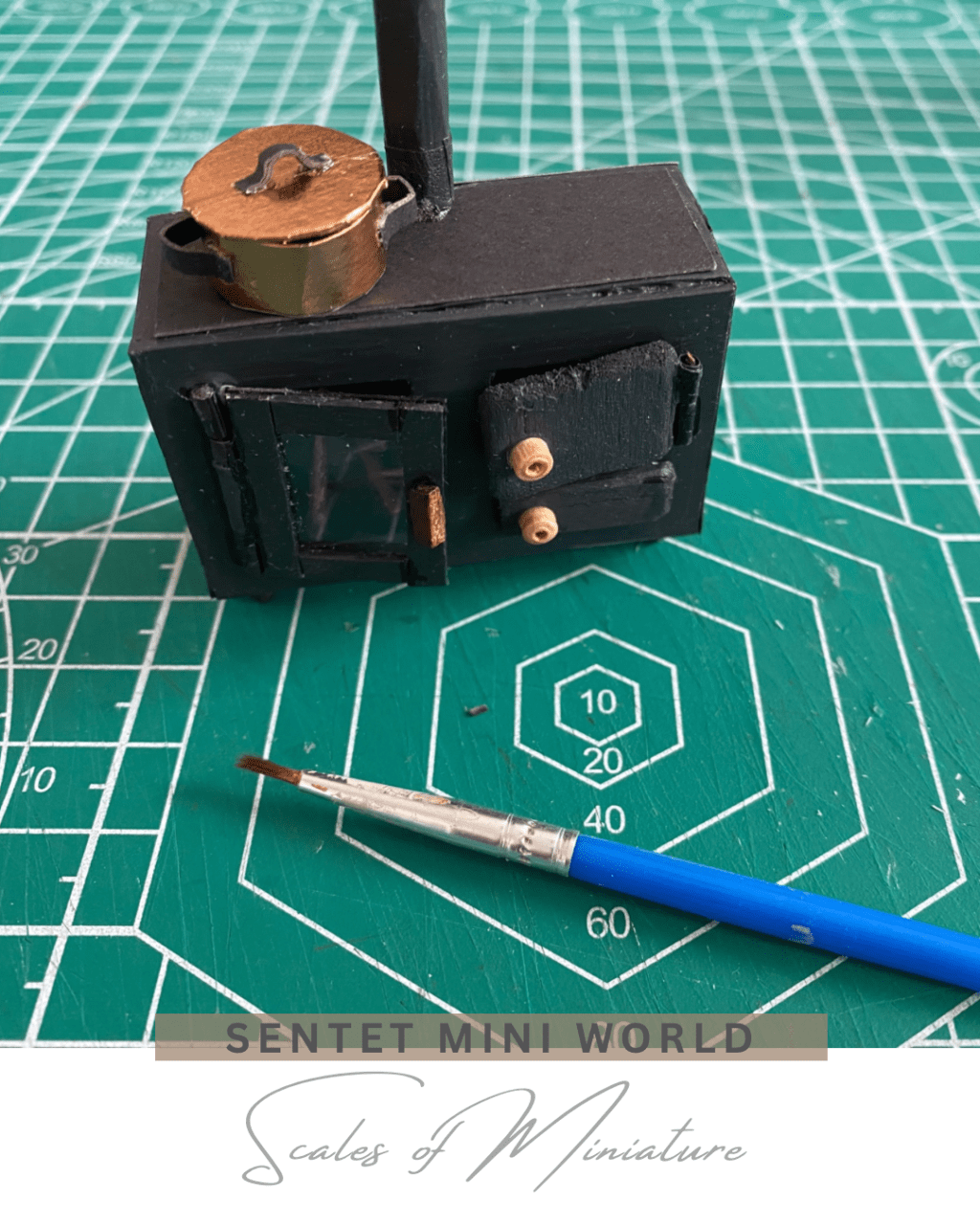
Scales indicate how small a miniature is compared to its real-size counterpart, with a full-size item represented as 1:1.
In dollhouses, the most common scale is 1:12, where 1 unit in the miniature equals 12 units in real life. For instance, if a real chair is 30 inches wide, a 1:12 scale chair would be 2.5 inches wide.
When designing my dollhouse, I opted for 1:24 or 1:30 scales. In these scales, a chair that’s 30 inches wide in real life becomes only 1 inch wide. Simply put, the larger the scale number, the smaller the miniature.
Consider the photo in this post as an example – the bigger one is 1:24 scale, and the smaller one is 1:30 scale.
Now, the big question: what scale should you choose for your dollhouse? While 1:12 scale is the most popular, offering a wide range of furniture and accessories, it also takes up more space. It allows for greater detail, but limited space can be a challenge if you plan on having multiple dollhouses.
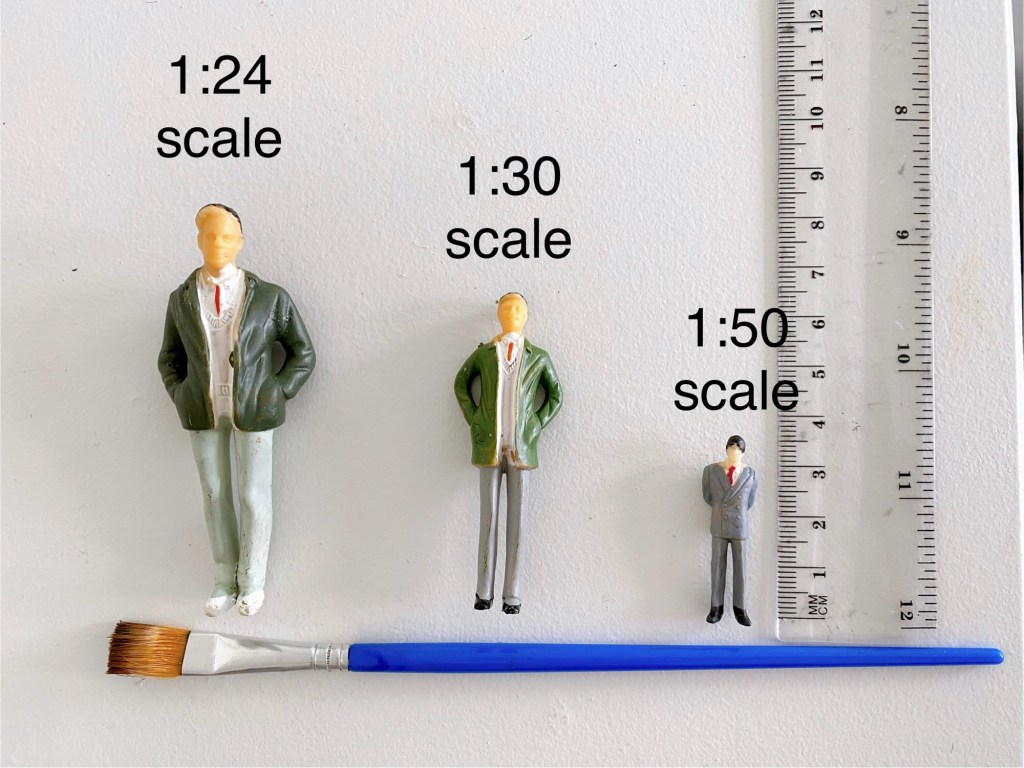
Limited space led me to choose 1:24 scale for my dollhouse. It suits my small place, and I wanted the flexibility of owning more than one dollhouse. Plus, I could reuse furniture from my Amazon dollhouse kits, which are either 1:24 or 1:30 scales.
In summary, if you want abundant accessory options with ample storage space, 1:12 scale is great. However, smaller scales can still bring joy to miniature making with different preferences and considerations.
Oh, and I’ve developed a solution for my space issue – stay tuned for upcoming articles.
🕯️Reference: Check this article for more details about miniature scales.”
Ps. I don’t have 1:12 scale people figure. Just to imagine a double-sized figure to 1:24.

 Sen.Tet
Leave a comment